
Meditation · Altered States · Consciousness

Dr. Ulrich Ott

Psychologist & Meditation Researcher

Research Fellow at the Institute for Frontier Areas of Psychology and Mental Health (IGPP), seconded to the Bender Institute of Neuroimaging (BION) at Justus Liebig University Giessen.

Ulrich Ott has conducted research at Justus Liebig University Giessen since 1998. His work on meditation, yoga, and altered states of consciousness spans collaborative EEG and neuroimaging studies of meditators, absorption and extraordinary experience, predictive-processing accounts of practice, and a question that is less often asked: what happens when meditation becomes difficult or destabilizing.

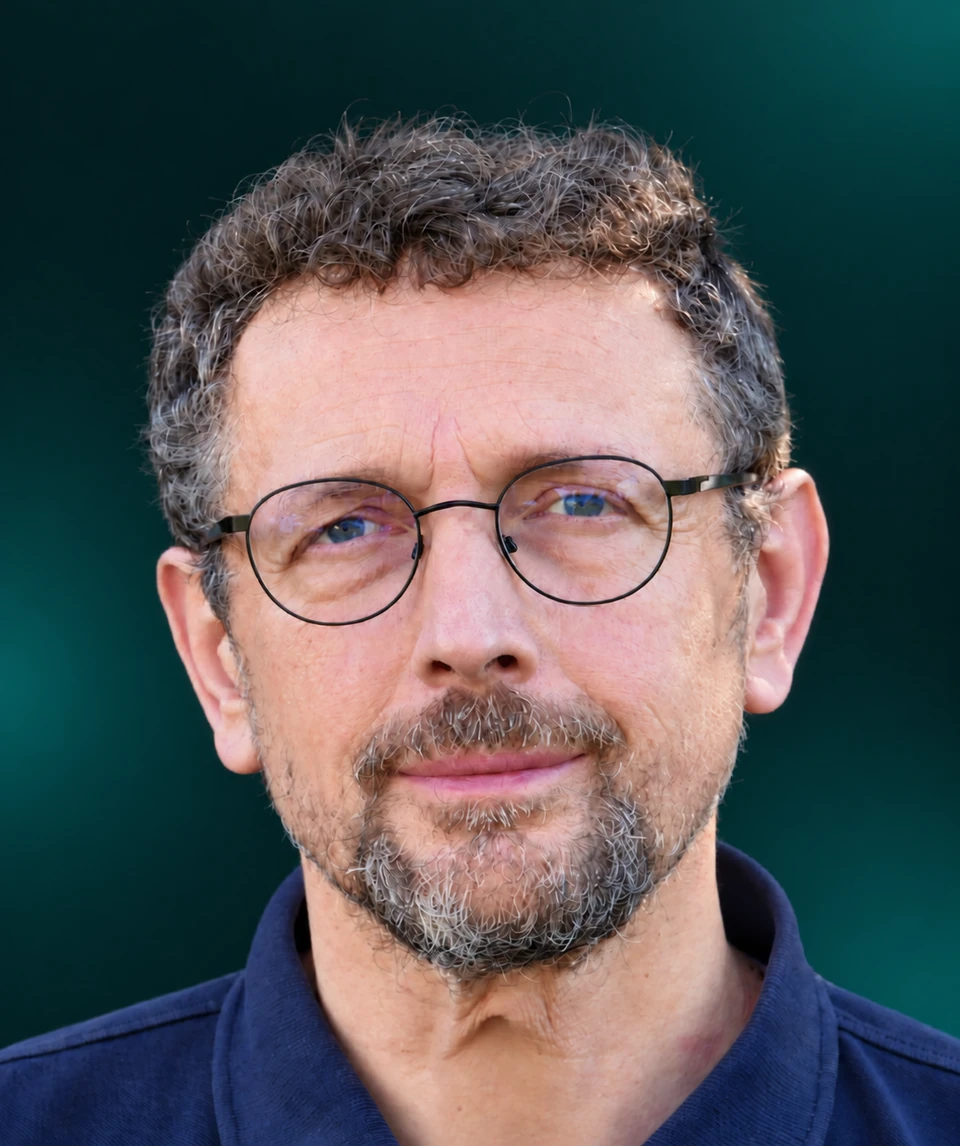
Portrait of Dr. Ulrich Ott
Doctorate
Dr. phil. nat., Goethe University Frankfurt, 2000
JLU Giessen
Conducting research since 1998
IGPP
Research Fellow since 2005
Research Focus

What meditation and altered states do, and how differently they can unfold.

IGPP and Justus Liebig University Giessen describe his research as covering altered states of consciousness and their induction, meditation and yoga, absorption, mystical and extraordinary experiences, and the effects of meditation on attention, emotion, self-perception, and the perception of reality.

01

Meditation & Mindfulness

Ott is a coauthor of the 2011 Perspectives on Psychological Science paper that proposed four interacting mechanisms of mindfulness meditation: attention regulation, body awareness, emotion regulation, and change in perspective on the self.

With Karin Matko and Peter Sedlmeier, he also coauthored research that began from a collection of 309 meditation practices, reflecting the view that “meditation” spans many materially different techniques rather than one uniform intervention.

  • Attention regulation
  • Body awareness
  • Emotion regulation
  • Perspective on the self
  • Diversity of techniques
02

Altered States & Absorption

His consciousness research predates the recent mindfulness boom. He began at the University of Giessen in 1998 on the project Rhythmic Trance Induction, and he coauthored the 2005 Psychological Bulletin review “Psychobiology of Altered States of Consciousness.”

A central interest is absorption, the capacity for deep immersion: its neural correlates and its relationship to mystical and extraordinary experiences and to shifts in how the self and reality are perceived.

  • Altered states of consciousness
  • Absorption
  • Mystical & extraordinary experience
  • Self-perception
  • Perception of reality
03

Predictive Processing

In 2025 Ott published an article on predictive processing as a neuroscientific theory and its usefulness for understanding meditation.

His explanatory account, drawing in particular on work by Laukkonen and Slagter, describes focused attention, open monitoring, and nondual practices as engaging predictive and self-related processes in different ways. Predictive processing is an influential theoretical framework rather than a settled consensus, and his account is presented here in that spirit.

  • Focused attention
  • Open monitoring
  • Nondual practice
  • Self-related processing
04 · Research to practice

Meditation Safety & Integration

Ott’s work does not look only at desirable outcomes. He coordinated a DFG-funded project on the risks and negative effects of meditation, has published on the risks of meditation practice and on spiritual and meditation-induced crises, and provides counseling for such crises at IGPP.

  • Difficult experiences
  • Adverse effects
  • Meditation-induced crises
  • Counseling & support

MethodsHis doctoral work examined 40-Hz EEG activity during rest, mental arithmetic, and meditation. Later collaborative work includes functional, structural, and electrophysiological studies of experienced meditators, alongside interview- and questionnaire-based research.

Meditation Safety & Integration

Taking difficult meditation experiences seriously.

Intensive contemplative practice can bring a wide range of experiences, including difficult ones. A substantial part of Ott’s work asks how such experiences arise, how people make sense of them, and what helps.

DFG-funded research project · 2016–2019

Risks and Negative Effects of Meditation

Risiken und negative Wirkungen von Meditation · DFG project 314155732 · Ulrich Ott, applicant

The project investigated difficult or unpleasant experiences associated with regular meditation: how practitioners interpret them, which interventions help, and which personal or practice-related factors may contribute to them.

According to IGPP, the team interviewed more than 100 meditators, teachers, and therapists. From these interviews, the researchers developed a questionnaire that is now used in IGPP counseling to characterize the phenomena people report and the distress associated with them. The project cooperated with the Varieties of Contemplative Experience project at Brown University and with Terje Sparby.

The work continues today. Ott provides counseling for spiritual and meditation-induced crises at IGPP, and in 2024 he published a review of current research on the risks of meditation practice (with Michael Tremmel and Freya von Hohnhorst) and an article on establishing IGPP’s counseling focus on these crises (with Liane Hofmann).

100+Meditators, teachers, and therapists interviewed
QuestionnaireDeveloped from the interviews and now used in IGPP counseling
CounselingCurrent IGPP counseling for spiritual and meditation-induced crises

Why this perspective matters for Retreat-OS

Retreat-OS is organized around preparation, retreat context, documentation, integration, and follow-up, rather than the assumption that intensive experiences are inherently beneficial. Research on difficult meditation experiences is one reason that orientation matters.

Please noteDr. Ott’s counseling work takes place at IGPP and is not a Retreat-OS service. This page describes his research and professional background; it is not clinical guidance and does not assess anyone’s suitability for meditation or retreat participation.

Selected Research

Six selected works, from altered states to meditation risks.

A curated selection, not a full bibliography. Most of Ott’s best-known papers are collaborative; authorship is shown for each entry.

  1. 2025

    Predictive Processing. Eine neurowissenschaftliche Theorie und ihr Nutzen für das Verständnis von Meditation

    Predictive processing: a neuroscientific theory and its use for understanding meditation

    Ott, U. · Zeitschrift Bewusstseinswissenschaften. Transpersonale Psychologie und Psychotherapie, 31(2), 6–15.

    His most direct published engagement with predictive processing as a way of understanding meditation.

    Sole author
  2. 2024

    Spirituelle und meditationsinduzierte Krisen: Etablierung eines neuen Beratungsschwerpunktes am IGPP

    Spiritual and meditation-induced crises: establishing a new counseling focus at IGPP

    Hofmann, L., & Ott, U. · Zeitschrift Bewusstseinswissenschaften. Transpersonale Psychologie und Psychotherapie, 30(2), 34–45.

    Connects research on difficult contemplative experiences with an institutional counseling service.

    Coauthor
  3. 2024

    Risiken von Meditationspraxis: Eine Übersicht über aktuelle Forschungsergebnisse

    Risks of meditation practice: an overview of current research findings

    Ott, U., Tremmel, M., & von Hohnhorst, F. · Zeitschrift Bewusstseinswissenschaften. Transpersonale Psychologie und Psychotherapie, 30(2), 24–32.

    A review of research on adverse effects, directly relevant to preparation and integration.

    First author
  4. 2021

    What Do Meditators Do When They Meditate? Proposing a Novel Basis for Future Meditation Research

    Matko, K., Ott, U., & Sedlmeier, P. · Mindfulness, 12(7), 1791–1811.

    Characterizes the diversity of meditation techniques instead of treating meditation as a single practice.

    Coauthor
  5. 2011

    How Does Mindfulness Meditation Work? Proposing Mechanisms of Action From a Conceptual and Neural Perspective

    Hölzel, B. K., Lazar, S. W., Gard, T., Schuman-Olivier, Z., Vago, D. R., & Ott, U. · Perspectives on Psychological Science, 6(6), 537–559.

    Proposed attention regulation, body awareness, emotion regulation, and change in perspective on the self as interacting mechanisms.

    Coauthor
  6. 2005

    Psychobiology of Altered States of Consciousness

    Vaitl, D., Birbaumer, N., Gruzelier, J., Jamieson, G. A., Kotchoubey, B., Kübler, A., Lehmann, D., Miltner, W. H. R., Ott, U., Pütz, P., Sammer, G., Strauch, I., Strehl, U., Wackermann, J., & Weiss, T. · Psychological Bulletin, 131(1), 98–127.

    A review of spontaneous, physiologically induced, psychologically induced, and pathological altered states.

    Coauthor
Books & Public Scholarship

Translating research for practitioners and the public.

Alongside his research, Ott writes German-language books on meditation, yoga, and spirituality. He also lectures and teaches seminars for people learning meditation, meditation and yoga teachers, and psychotherapists, combining scientific findings with practical exercises.

Connection to Retreat-OS

Two distinct things: an independent research career and a project collaboration.

Dr. Ott’s academic work and his connection to Retreat-OS rest on different sources.

Retreat-OS project connection
Research program in development with Adam Asmaeil ↗

Retreat Design Architecture (RDA)

RDA studies retreats as longitudinal processes rather than isolated intensive experiences. Its central concern is what happens after re-entry into ordinary life: which capacities acquired or enabled during a retreat remain usable, which conditions interfere with their expression or maintenance, and whether targeted post-retreat interventions can reduce specific barriers.

The current program uses a target–barrier–bridge logic to generate more precise, falsifiable questions about acquisition, re-entry, transfer, maintenance, generalization, decay, and reversal.

Retreat-OS project connection
Framework in development with Adam Asmaeil ↗

Precision Flexibility as a Trainable SkillA Predictive Processing Framework for Mindfulness, Psychedelic Experience, and Integration

A predictive-processing framework examining whether mindfulness-related capacities may support more stable, sensitive, and context-responsive adaptation in how confidence, salience, and experiential authority are allocated across sensory, affective, cognitive, and self-related information.

The framework distinguishes amplification, flexibility, and consolidation and is being developed around measurable constructs and falsifiable predictions.

Independent academic work

Research documented by IGPP, JLU Giessen, the DFG, and his publications

Everything in the research, safety, and publication sections above belongs to Dr. Ott’s own career, carried out at IGPP and the Bender Institute of Neuroimaging, independently of Retreat-OS.

  • Mechanisms and diversity of meditation practice
  • Altered states of consciousness and absorption
  • Predictive-processing accounts of meditation
  • Risks of meditation and meditation-induced crises

Where his research is relevant to Retreat-OS

These are areas of conceptual relevance. His research was not conducted on Retreat-OS and does not test or validate its design.

Preparation

Research on factors that may contribute to difficult or adverse meditation experiences.

Practice specificity

Research showing that meditation covers many materially different techniques.

Attention & self-regulation

The mechanisms framework: attention, body awareness, emotion regulation, and perspective on the self.

Depth of experience

Research on altered states, absorption, and changes in the perception of self and reality.

Theoretical language

His predictive-processing account of focused attention, open monitoring, and nondual practice.

Integration & follow-up

Research and counseling on difficult and meditation-induced crisis experiences.

Background

A continuous research path since 1998.

Studies

Psychology, Goethe University Frankfurt

1998

Research at Justus Liebig University Giessen begins

Research fellow on the Giessen project Rhythmic Trance Induction.

2000

Dr. phil. nat., Goethe University Frankfurt

Doctoral work on characteristics of 40-Hz activity in the EEG during rest, mental arithmetic, and meditation, published as Merkmale der 40 Hz-Aktivität im EEG während Ruhe, Kopfrechnen und Meditation (Peter Lang, 2000).

2005

Research Fellow at IGPP, seconded to BION, JLU Giessen

2016–2019

DFG project: Risks and Negative Effects of Meditation

Applicant for the DFG-funded project on difficult and adverse meditation experiences.

2025

Predictive processing and meditation

Publishes an article applying predictive processing to the understanding of meditation.

Current

Research Fellow, IGPP · research at BION, JLU Giessen

Provides counseling at IGPP for spiritual and meditation-induced crises. Also works independently as an author, lecturer, consultant, and reviewer.